
Quick and Easy Pickled Daikon Radish Recipe as a delicious accompaniment to many main dishes. Our Pickled Daikon Recipe will show you the quick pickle tips for marinating Korean pickled radish Mu or Japanese and Chinese Daikon.
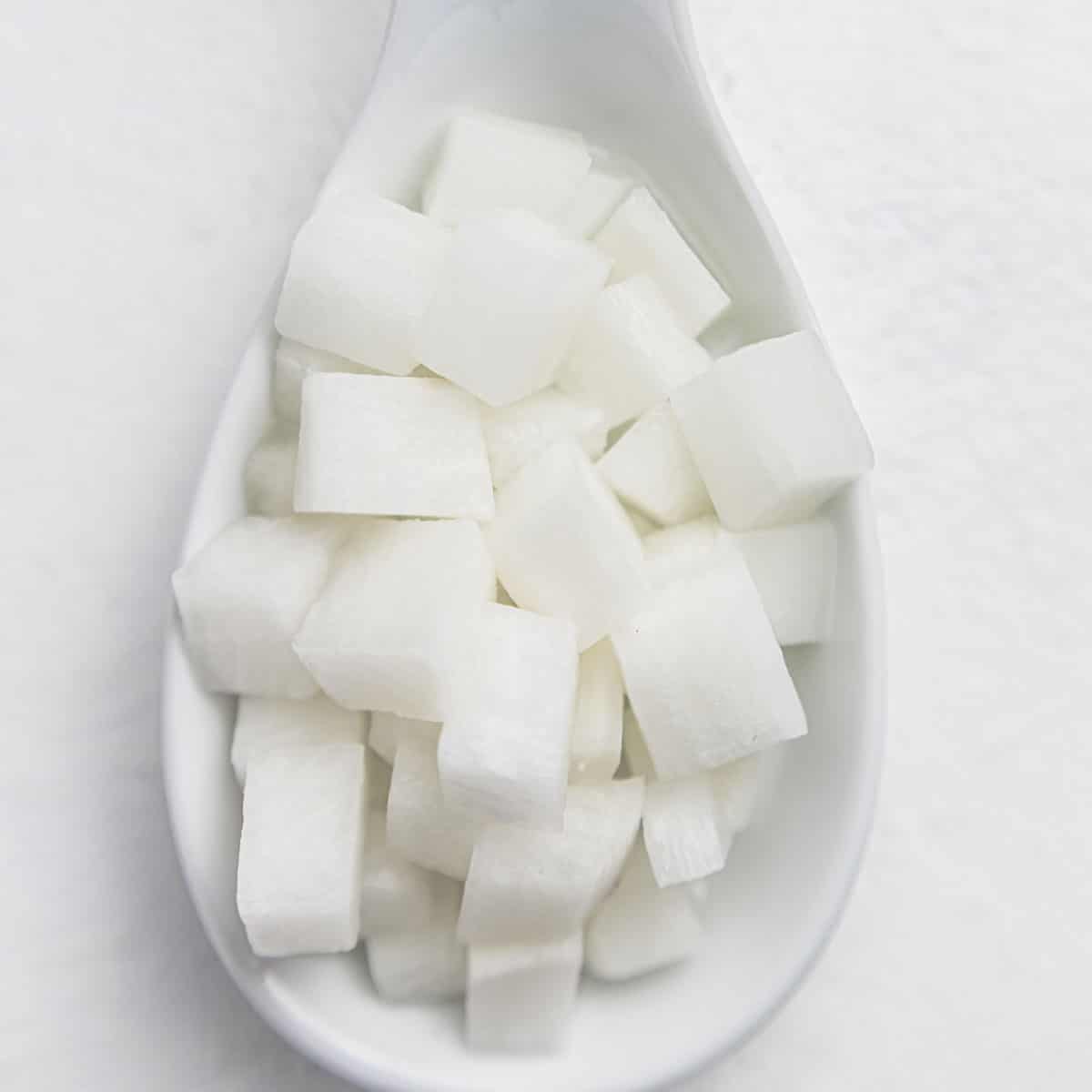
This pickle dish is best served as an appetizer addition or side dish to one of our main meals.
Goes perfectly with simple savory dishes like these pork tenderloin medallions, meatballs, pizza, sausage balls, burgers, or goulash.

Generally, a meal that needs a bit of sweet and sour addition.
PICKLED OR FERMENTED VEGETABLES
Pickled vegetables processed either by fermenting or using vinegar to preserve for longer are one of the favorites in many Asian dishes. They taste fabulous and are incredibly healthy, and give your meal the extra tangling flavor everyone craves.
You can pick sauerkraut and make our sauerkraut soup, sauerkraut chicken, or sausage sauerkraut. Make also your fermented pickles to enjoy as well.
And with today’s white pickled daikon, future blueberry flavored radishes, or beautiful Korean pickled radish with beetroot, you will have enough recipes to fill up your pantry and make a great banchan style.
WHAT IS DAIKON?
Daikon is a white root vegetable belonging to the radish family with a slightly sweet taste. This Japanese winter vegetable is harvested and sold internationally.
The growth takes a few months compared to rapidly growing regular radishes we know.
You can find a trendy Asian type of radish in most Asian grocery stores. Available throughout the whole year, but mostly during the winter season.
Please do not jump to recipe straight, as I would love to explain a few facts you might be interested in.
IS DAIKON KOREAN OR JAPANESE?
Daikon is a type of Japanese radish. It is one of the most popular vegetables for pickling in Japan.
There is also a Korean radish called Mu, which is very similar to the taste.
Japanese daikon and Korean Mu can be interchangeable in the recipes for their same root vegetable flavors and structures.
Daikon tastes very similar to the ordinary radish we are used to. It is slightly sweeter and less spicy.
The taste varies on the season daikon is harvested. During the winter, you get more of a sweet flavored radish, compared to summer’s spicier taste.
All of the vegetables and not only pickled radishes are very nutritious and great to have as an addition to our diets.
Radish, Japanese daikon, or Korean Mu are very nutritious. Very low in calories and filled with vitamins and water, they are perfect vegetables adding extra hydration to your body.
Complete nutrition information is added directly to the recipe card.
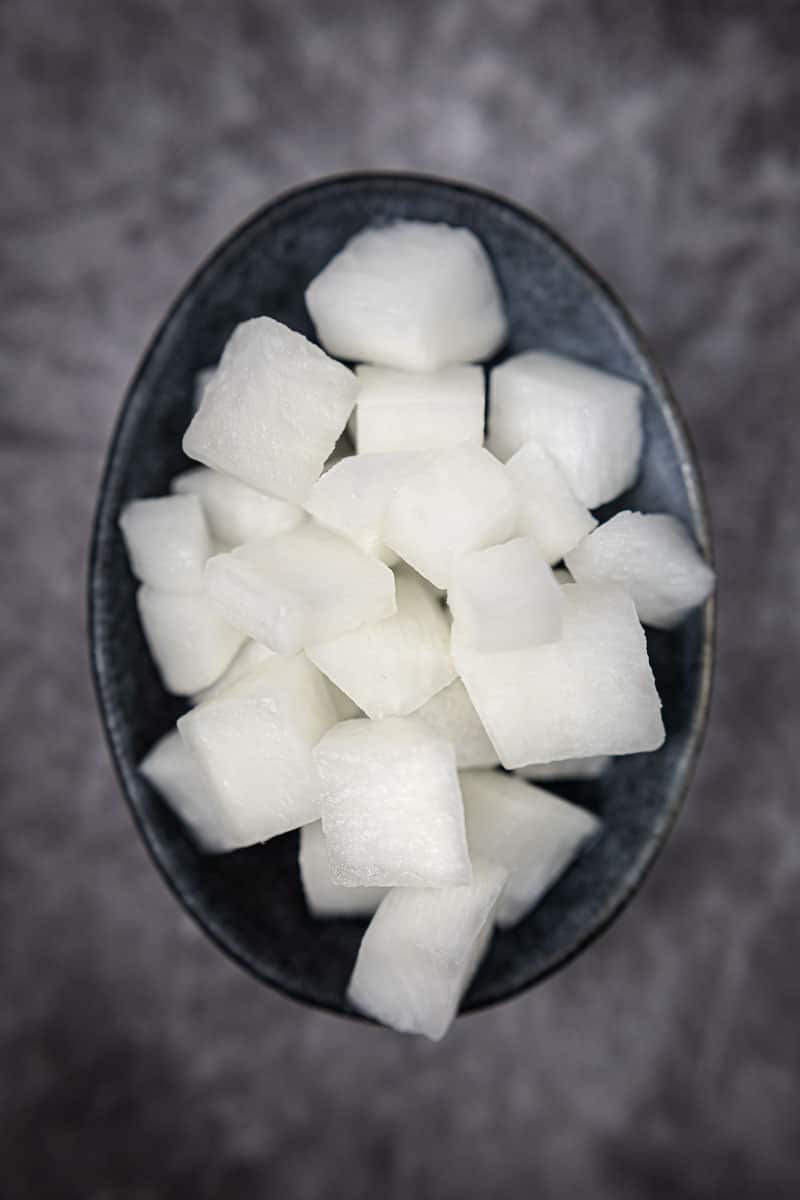
IS PICKLED RADISH KETO?
Store-bought pickled radish is not exactly keto or low carb because it mainly contains some type of sugar. Following our sugar-free pickled recipe, you can have delicious keto sweet and sour radishes to serve with your dishes in just a few minutes.
WHAT DOES PICKLED RADISH TASTE LIKE?
The taste of pickled radish made me make this recipe for you. Serving in one of the restaurants we have visited got me immediately hooked. I loved this recipe so much that I had to go and discuss with the chef all the steps and ways to make it.
He loved hearing my excitement and willingness to learn how to make it his way.
The crunchiness of daikon, together with sweet and sour tangy and pickling flavor, gives you that exact accompaniment you need to enhance your dishes.
DIFFERENCE BETWEEN KIMCHI AND PICKLED
As some of you might wonder what the difference is between kimchi and pickled vegetables, I will try to explain briefly.
Kimchi vegetables are fermented in a similar way to our fermented pickles. Here you can combine carrots, white carrots, and daikon.
The brine is cooked in a saucepan and cool to room temperature. To ferment, jars with vegetables are left at room temperature for a few days.
You do not cook pickled radish on the other side. You can already enjoy the brine mixed with daikon after a few hours.
INGREDIENTS FOR PICKLED DAIKON RADISH
For todays recipe we are going to use a tangy mixture consisting of vinegar, sweetener and salt. The process is really simple and easy to understand.
I have also made a video with all the steps as some of you prefer the visual guidance.
For more detailed ingredients and notes, please have a look at our recipe card, where you can choose to print the recipe as well.
Once you do it the first time, you are going to fall in love with this recipe. From now on, once the dish is served, our pickles will be a part of it.
HOW TO PICKLE DAIKON
Coming to the actual recipe and a few easy steps, we will expand on a few essential faqs.
Pickling liquid brine, ways to cut daikon, and vinegar used.
HOW TO CUT DAIKON FOR PICKLES
As daikon is a big root vegetable, you can experiment with your own shapes and how you cut it.
I have even seen in some Asian markets stars or heart-shaped pickles.
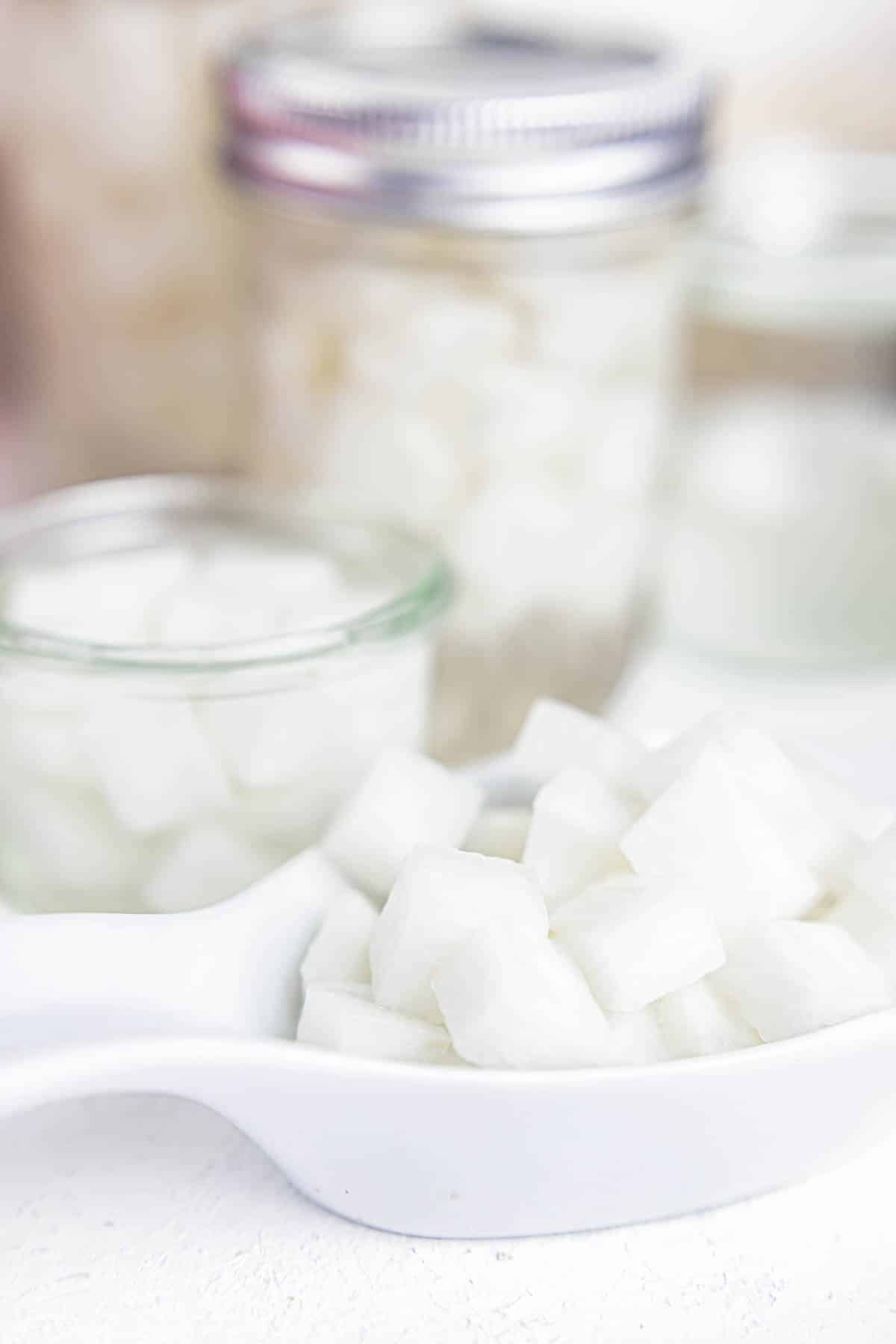
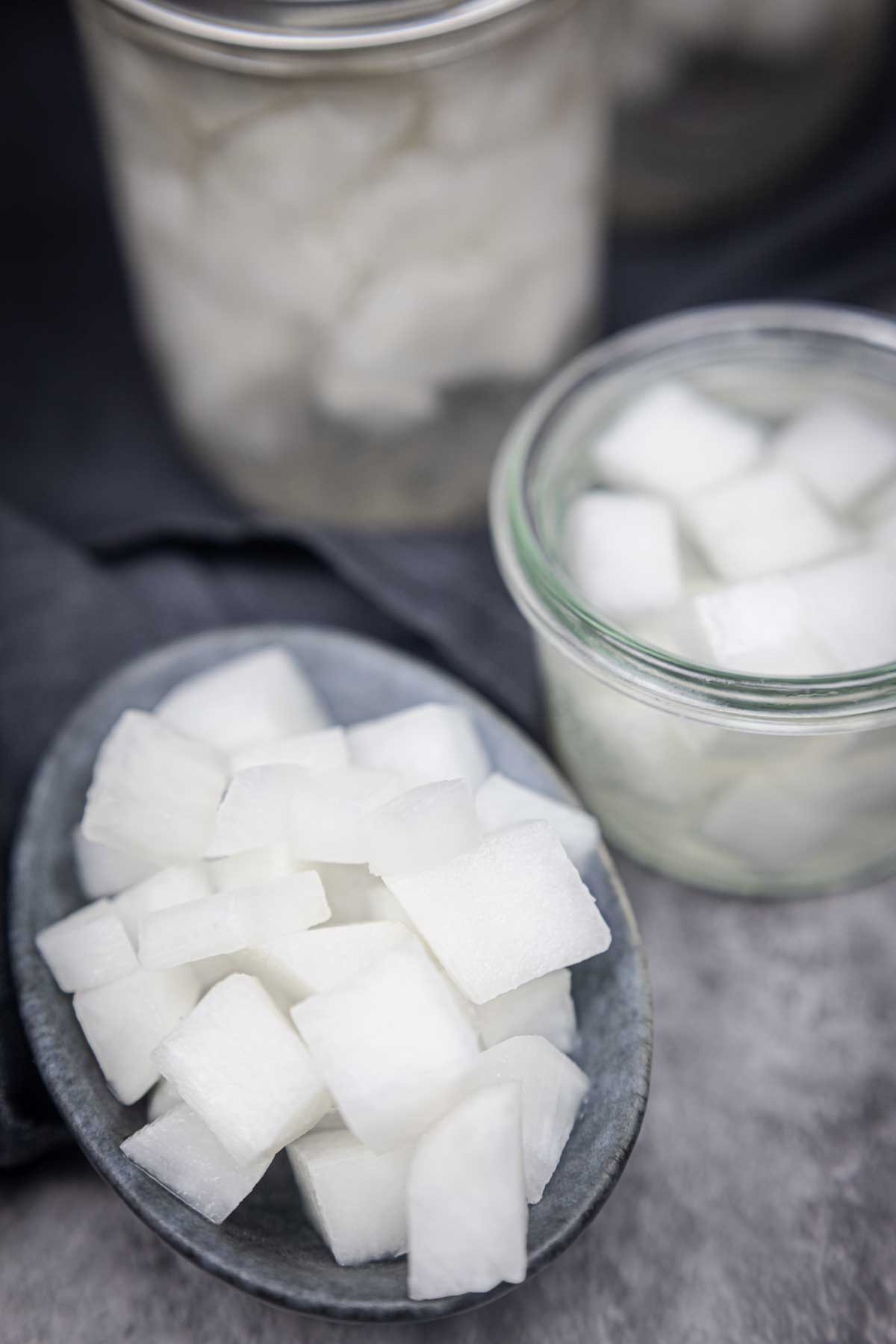
Cutting daikon into squares is the most popular way for Japanese or Korean pickled vegetables. Radish cubes let you still retain the crunchy texture even after days of having them in a brine.
You can as well slice, julienned, or shred radishes and carrots. But this is mainly used for kimchi, softening the vegetables much faster.
CAN YOU MIX CARROTS AND DAIKON?
As quite a few pickled jars contains a mix with carrots, some might ask this question. And yes, you can mix carrots together with radish, but I prefer to use shredded vegetables for mixing.
The sweet and salty flavors together with various mixed vegetables combines together perfectly.
PICKLING BRINE
For pickling brine, all you need is vinegar, water, sugar, and salt, in our case, sweetener. Thats all. Three ingredients only, plus water, to make the best brine.
BEST VINEGAR TO USE FOR PICKLING
The type of vinegar you are going to use depends on various factors.
If you want to retain the beautiful white color of your picked daikon, go for pure white vinegar or distilled white vinegar.
If you are ok with the slight yellowish color of the end recipe, apple cider vinegar, rice vinegar, or rice wine vinegar are great.
PICKLED JAPANESE DAIKON
As we make today’s recipe for pickled Japanese daikon, we pick the Japanese daikon radish as the main vegetable.
The easy and quick pickled radish recipe is tangy, sweet, salty, and delicious.
Kitchen gadgets needed:
- Mixing bowl
- Glass Jar
- Mason Jars or Airtight glass container
Ingredients needed:
- Daikon
- Vinegar
- Sweetener
- Salt
- Water
*Exact measurements are listed in the recipe card below.
And as our loyal readers, Wholesome Yum Foods has been so kind to offer to all of our subscribers 10% of ALL of their PRODUCTS using our Coupon Code:
As a great company, Lakanto is offering to all of our readers 15% of ALL of their Products using a Coupon Code: lowcarbnocarb.
STEP-BY-STEP INSTRUCTIONS FOR MAKING QUICK PICKLED DAIKON
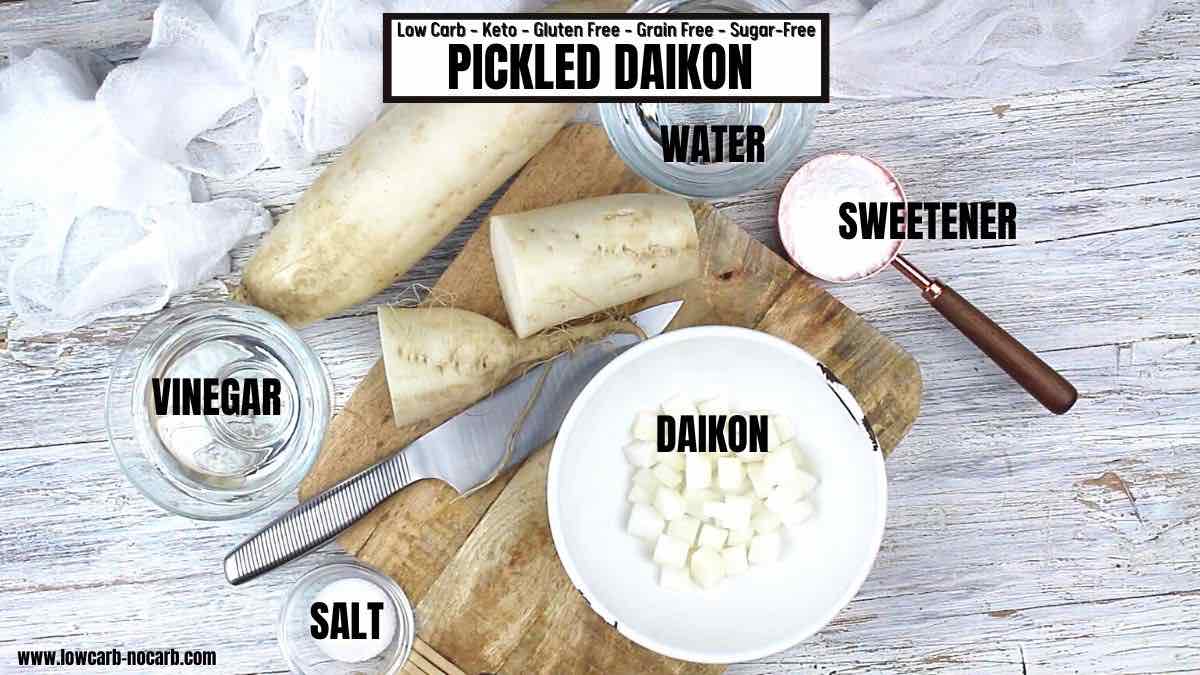
First step: Prepare ingredients for pickled daikon
Prepare all ingredients for preparing pickled daikon.
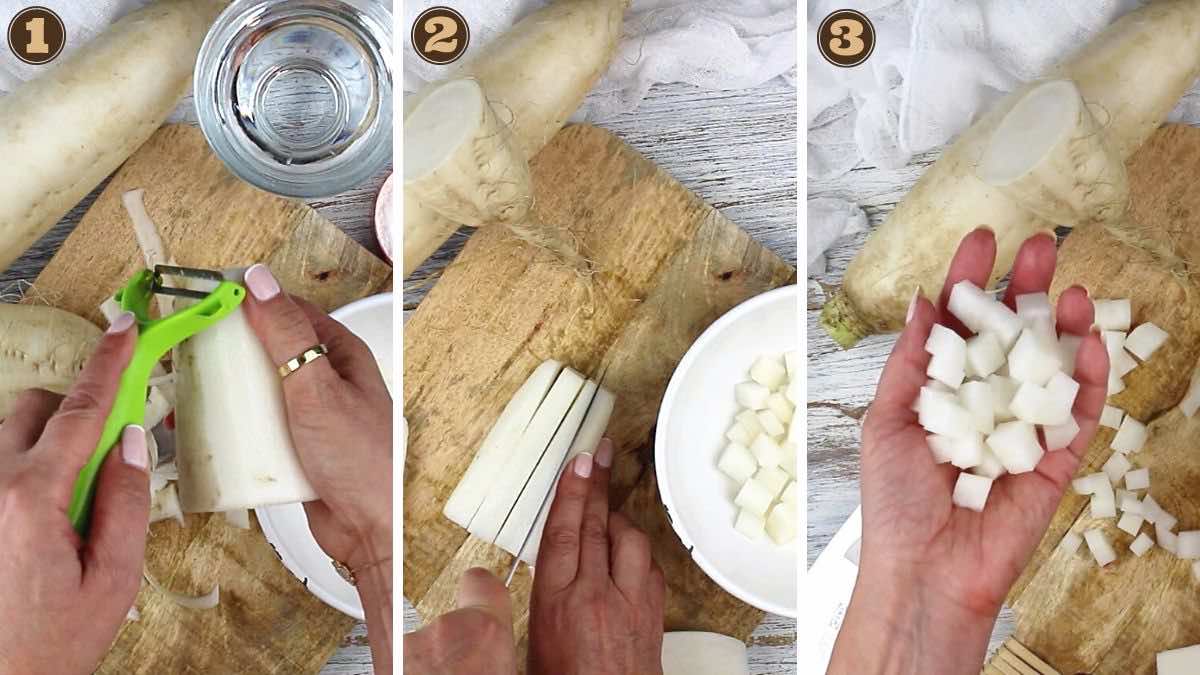
Second step: Clean and cut daikon
Fully clean your radish. Using a vegetable slicer, clean the outer skin and remove any impurities.
Using a sharp knife, first cut radish into approximately half an inch thick slices.
Once you have sliced, cut again into long stripes, again half-inch thick.
Those stripes are cut into cubes again half an inch. Cutting everything into the same thickness will result in perfectly tailored cubes. Please have a look at the video for a better understanding.
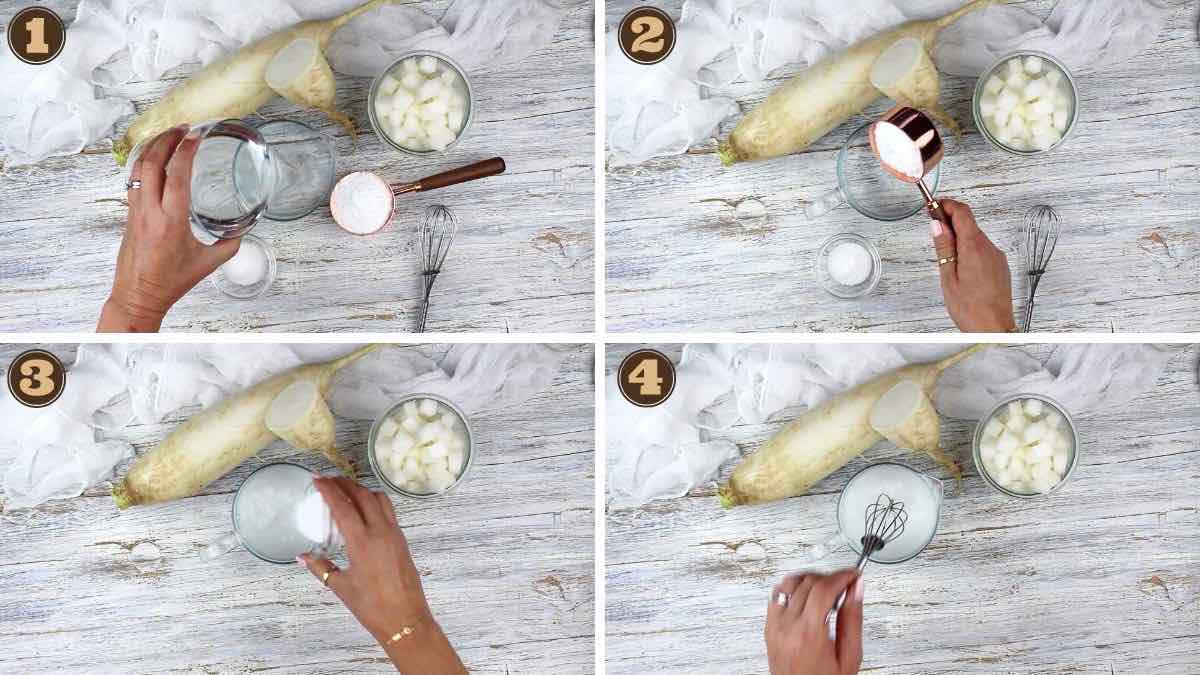
Third step: Prepare brine liquid
Prepare your liquid. It is super easy to make. In a jar, mix water with vinegar and add sweetener and salt.
Mix everything thoroughly using a whisk until all is dissolved and the liquid becomes clear again.
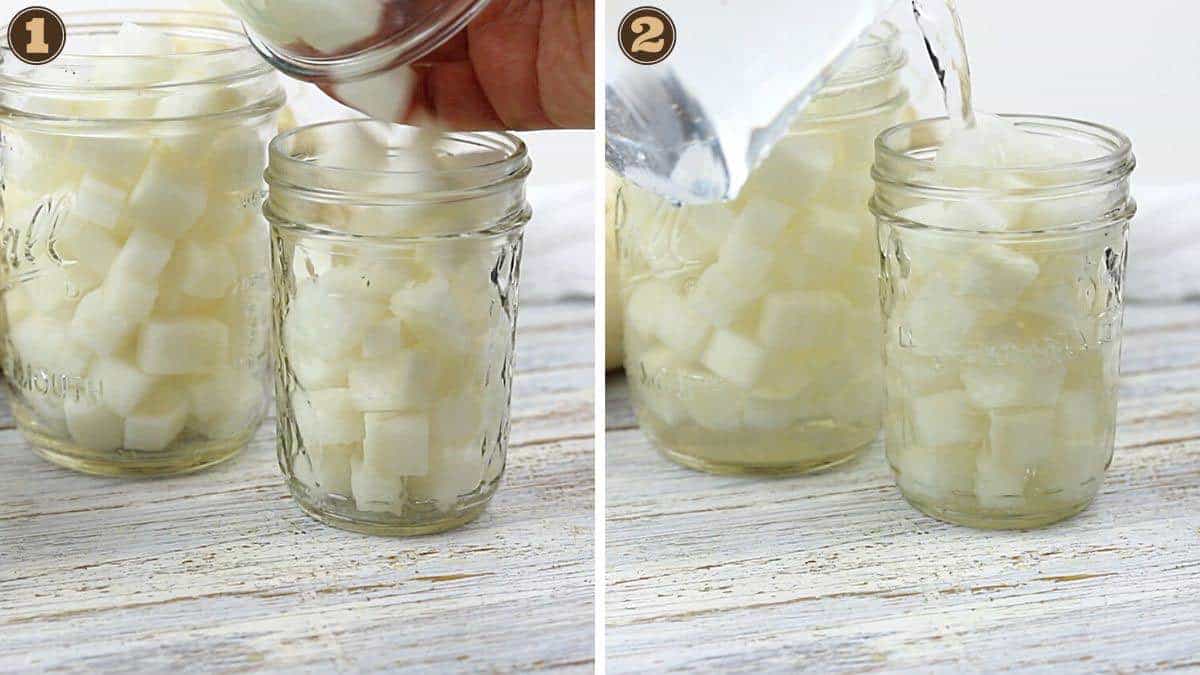
Fourth step: Fill mason jars
Using either mason jars or airtight glass containers, fill those with daikon cubes to approximately 3/4.
You can use jars in various sizes.
Pour the liquid into each jar to fully cover the cubes.
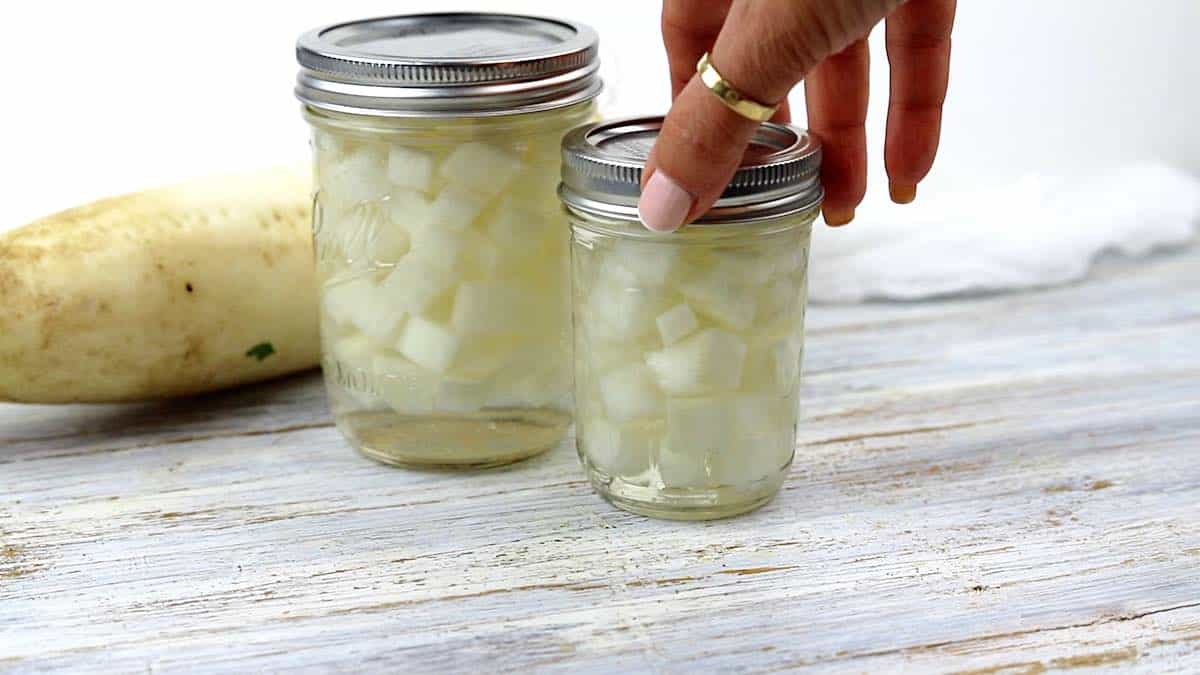
Fifth step: Close and store
Gently move all the jars onto a kitchen counter. Let sit for approximately an hour for all to set and start the pickling process.
Later on, fully close and place the jars to refrigerate. Let it marinate for two to three days to get the best flavor.
HELPFUL TIPS AND TRICKS:
- Daikon alternative – you can use any root vegetable from the radish family, such as Korean Hu or European radish.
- Sweetener – it is best to use powdered sweetener as it dissolves in the water faster.
- Vinegar – use pure white vinegar to get the beautiful clear white pickled jar.
- Peppery – if you prefer a more Asian cooking style, add a bit of chili pepper.
- Double the recipe – as most of the daikons are pretty big, you can double the recipe and use one pound of cubed veggies which is 4 cups.
- Nutrition – almost 0 for everything except minimal six calories per bowl.
FREQUENTLY ASKED QUESTIONS AND ANSWERS
What to serve with pickled daikon
- Sushi
- Naruto rolls
- Meatballs
- Pizza
- Stir fry
- Sausage balls
- Burger
- Goulash
- oven-baked salmon and asparagus
Substitute for daikon
You can substitute daikon with any type of radish you can get or purchase.
You can use small European radish or pink watermelon red radish as well.
But the best substitute with a similar size and taste is Korean radish Mu.
You can also substitute with turnip, which I used in our “potato” mayo salad.
How to make Korean radish pickles?
Using Korean radish called Mu found in Korean grocery stores is the way to have a Korean style pickle. Otherwise, follow the same steps here.
What is Korean pickled radish called?
Crunchy Korean pickled radish is called Mu.
It is very similar in look and taste, and you can use it as a replacement in any daikon recipe.
Korean radish is a bit rounder, thicker, and bigger than thinner and longer daikon. Mu also has a slight green outer color in the half of the root.
Mu is famously served as a Korean side dish with Korean fried chicken called Chicken Mu.
What makes pickled daikon yellow?
The type of vinegar or additional spices is the main reason your pickled daikon can turn yellow.
Clear white vinegar is essential to retain the pure white color of daikon.
With regards to the spices, even a tiny drop of turmeric will immediately change the end color of your pickles.
How to store and preserve pickled daikon?
As already mentioned, stored in the refrigerator is the best option.
You can also preserve it for longer using the usual preserving methods by cooking the liquid before.
How long can you keep pickled daikon?
Everyone says you can store pickled vegetables for up to two weeks in your refrigerator.
You can follow those guides.
But so you know, I already have mine there for a month. I want to experiment with how long it would last, and they are still super delicious and crispy.
Does pickled daikon go bad?
It should not go bad at all. Make sure the liquid in your jar covers all the cubes. Also, let the jar be fully closed at all times.
Can Pickled Daikon Be Frozen?
As you can store the pickles in your fridge for a long time, I would not suggest freezing them.
More Pickle Recipes You Might Like
- Fermented pickles
- Blueberry flavored radishes
- Korean pickled radish with beetroot
- Rainbow pickled daikon recipes
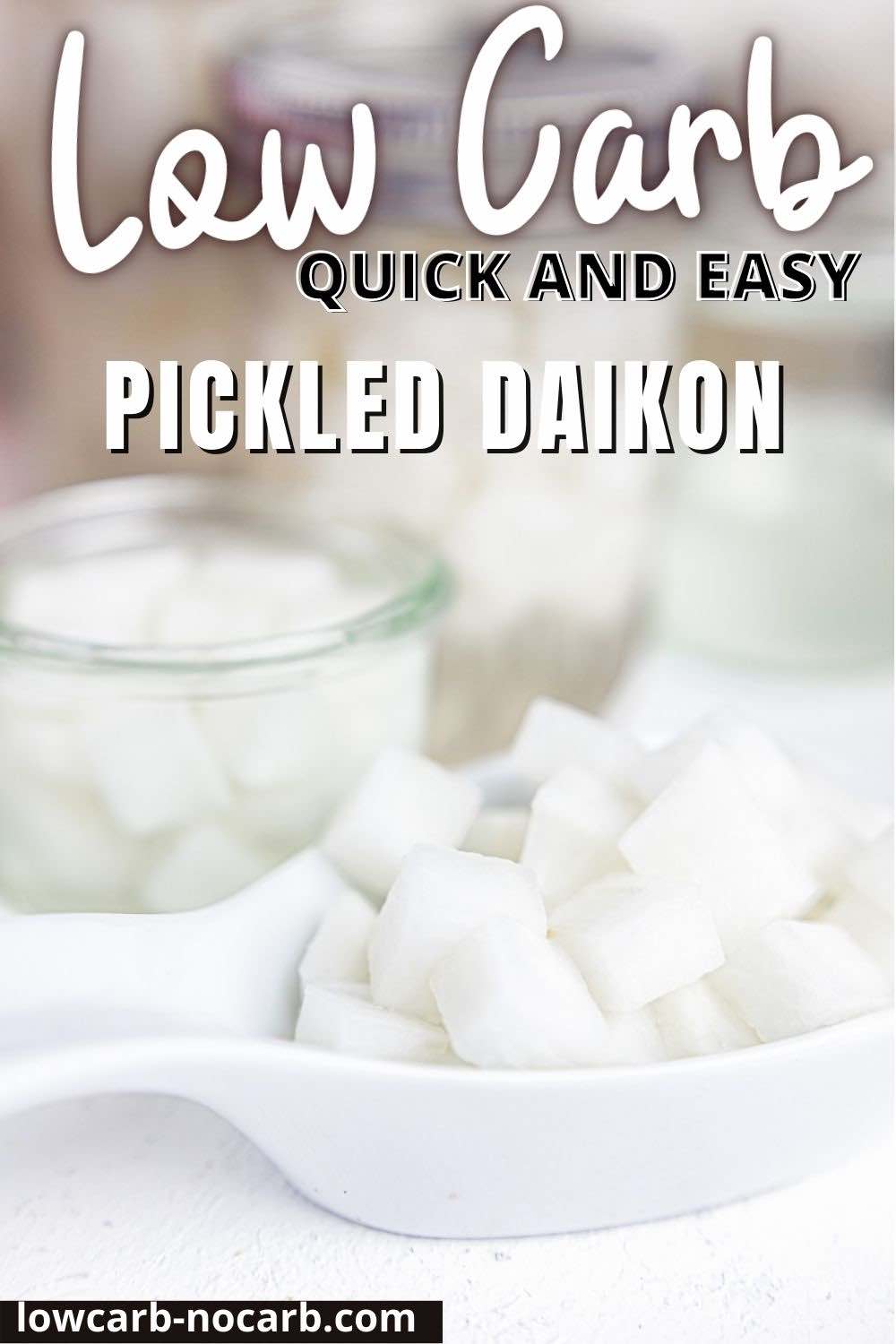
Pin for later
Need Support or have Questions? Join our Free Facebook Group.
Follow us on Pinterest, Facebook, Instagram, TikTok, Flipboard, or YouTube.
For weekly New Recipes and a FREE E-Book get into our NEWSLETTER.
Full Recipe with print-out option
Thank you for giving us 5 stars.
Pickled Daikon Radish Recipe
Video
Instructions
- Prepare all ingredients for preparing pickled daikon.
- Fully clean your radish. Using a vegetable slicer, clean the outer skin and remove any impurities. Using a sharp knife, first cut radish into approximately half an inch thick slices. Once you have sliced, cut again into long stripes, again half-inch thick. Those stripes are cut into cubes again half an inch.
- Prepare your liquid. It is super easy to make. In a jar, mix water with vinegar and add sweetener and salt. Mix everything thoroughly using a whisk until all is dissolved and the liquid becomes clear again.
- Using either mason jars or airtight glass containers, fill those with daikon cubes to approximately 3/4. Pour the liquid into each jar to fully cover the cubes.
- Gently move all the jars onto a kitchen counter. Let sit for approximately an hour for all to set and start the pickling process. Later on, fully close and place the jars to refrigerate. Let it marinate for two to three days to get the best flavor.
Notes
- Daikon alternative – you can use any root vegetable from the radish family, such as Korean Hu or European radish.
- Sweetener – it is best to use powdered sweetener as it dissolves in the water faster.
- Vinegar – use pure white vinegar to get the beautiful clear white pickled jar.
- Peppery – if you prefer a more Asian cooking style, add a bit of chili pepper.
- Double the recipe – as most of the daikons are pretty big, you can double the recipe and use one pound of cubed veggies which is 4 cups.
- Nutrition – almost 0 for everything except minimal six calories per bowl.
Nutrition
Disclaimer
Please note that nutrient values are estimates only. Variations can occur due to product availability and manner of food preparation. Nutrition may vary based on methods of origin, preparation, freshness of ingredients, and other factors.
If you are still looking for some Low Carb products, visit our recommended site on Amazon, which we participate in as affiliates. Just click on the image below and all will be revealed.
Keto & Low Carb Kitchen Pantry
Here’s what you should have in your kitchen for your keto and low-carb cooking. These are all the products and ingredients you need to bake, cook, and explore in our keto and low-carb lifestyle.